The federal government keeps financing the promise of rehabilitation. The people it incarcerates are still waiting for that promise to become real.
In September 2025, people on waiting lists for the Bureau of Prisons’ literacy program had spent an average of 40 months waiting. That figure appears in a Justice Department inspector general’s report released this May, alongside the financial findings that will likely attract more attention. But it deserves consideration on its own: more than three years waiting for an education program inside an institution that is supposed to prepare people for life outside it.
A government can announce a reform in an afternoon. For the person waiting to benefit from it, the relevant measure is not the announcement, the appropriation, or the existence of a program in a catalog. It is whether someone eventually opens the classroom door.
The First Step Act, signed into law in 2018, was supposed to make that opening more likely. Among its central provisions were requirements to expand rehabilitation programs and address incarcerated people’s individual needs. Eligible participants could earn credits toward earlier placement in community confinement or supervised release. Education, treatment, and preparation for employment were meant to be meaningful parts of the federal government’s responsibility—not optional improvements to be considered after everything else.
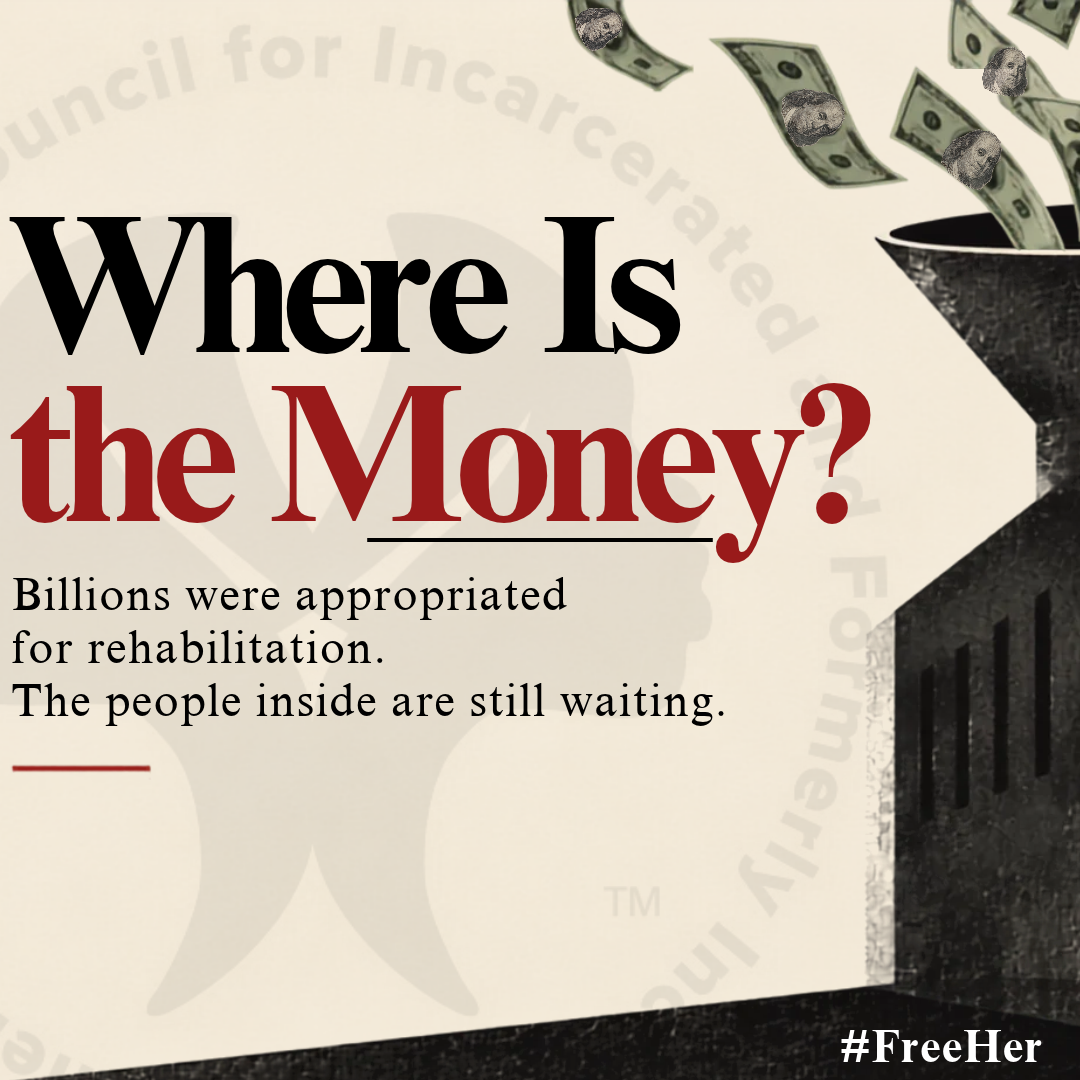
The inspector general’s evaluation examined the bureau’s use of $1.23 billion appropriated for implementing the law, focusing on fiscal years 2022 through 2024. It found serious failures in financial management, oversight, and program delivery. That is not a finding that $1.23 billion was stolen or misappropriated. The documented problems are specific and consequential, without exaggeration.
Consider the telephone accounting. The bureau used approximately $258.7 million in First Step Act funds to reimburse itself for free telephone calls without clear authority to use the funds that way. Included was roughly $106 million beyond the bureau’s calculated cost of providing the service. The transfers moved money from time-limited appropriations into the bureau’s Trust Fund, which has no fixed spending deadline.
The scandal here is not that incarcerated people could call home. Contact with a child, a partner, or an aging parent should not be treated as an extravagance. Congress should fund that contact openly and adequately. But a service's value does not excuse questionable accounting. Supporting free calls and insisting that a federal agency explain its reimbursements are entirely compatible positions.
The bureau also transferred nearly $120 million to the Department of Labor for a joint initiative providing vocational training and other reentry support. Yet it maintained such limited oversight that it could not ensure the transferred funds were advancing the purposes of the First Step Act.
Then there was the money the bureau did not commit. As of April 2026, $16.8 million from its fiscal year 2022 appropriation remained unobligated. The bureau anticipated that most of it could no longer support First Step Act initiatives and would ultimately move it to the Justice Department’s Working Capital Fund, where it could serve unrelated purposes.
These are different failures. Spending without clear authority is not the same as inadequate oversight, and neither is the same as allowing funds to become unavailable for their intended purpose. What connects them is the distance between the government’s stated commitment to rehabilitation and its ability to show what that commitment actually delivered.
The report acknowledges progress: the bureau expanded programming. But staffing limitations, insufficient instructional space, and lockdowns continued to interfere with access. Programs were not as widely available as the bureau’s public guide suggested.
Even employees assigned to deliver rehabilitation were pulled into maintaining confinement. Between fiscal years 2022 and 2024, staff in program-delivery departments spent more than 800,000 hours covering correctional-officer posts. Those were hours unavailable for their regular responsibilities.
That arrangement embeds an institutional choice. When staffing breaks down, rehabilitation can be postponed so that confinement continues. The immediate operational need may be real. But when the postponement becomes routine, it is worth asking whether rehabilitation is an organizing purpose of the institution or a service provided only when the institution can spare the time.
The consequences for incarcerated people also require precision. The report explains that eligible people can earn time credits while on program waitlists. It would therefore be inaccurate to claim that every unavailable class necessarily produces a longer prison stay.
That protection matters. Nobody should lose an opportunity to leave prison because the government failed to provide a program. But a time credit is not an education, and a place on a waiting list is not treatment. Protecting someone’s release date does not relieve the government of its responsibility to provide the help it promised.
Nor should the response be to keep people incarcerated until the bureau gets around to helping them. That would make the person with the least control over the failure bear its greatest consequence.
The strongest defense of additional prison funding is also the most obvious: people are living and working inside these institutions now. They need functioning buildings, adequate medical care, and competent staff. Those obligations cannot be abandoned to make a point about government waste.
But meeting an immediate obligation is different from accepting an indefinite investment strategy. Congress has separately provided the bureau with $5 billion in supplemental funding to address staffing and infrastructure problems. That money is distinct from the First Step Act funding examined in this evaluation. The size of the additional commitment makes accountability more urgent, not less.
An inspection cannot establish that every prison reform is destined to fail. It can, however, challenge the assumption that another appropriation is itself evidence of reform.
We should insist on safe conditions for people who remain incarcerated while pursuing a different objective: fewer people confined, more people supported in their communities, and less public money required to sustain incarceration. Repairing a dangerous building may be necessary. It does not settle whether we should continue organizing public safety around filling that building.
The alternative is not simply a hopeful list of social programs. Evidence shows that investments outside confinement can reduce its use. In a randomized evaluation of Denver’s supportive-housing initiative, researchers studied people experiencing chronic homelessness who had frequent contact with the criminal-legal and emergency-health systems. Over three years, those referred to housing and intensive support services experienced 30 percent fewer jail stays and 27 percent fewer jail days than people receiving usual services.
That finding does not mean housing alone prevents every kind of harm. It does demonstrate that, for the population studied, providing stability reduced incarceration. A public-safety strategy should take such results seriously rather than treating community investment as a charitable supplement to the supposedly more practical business of punishment.
Imagine applying the scrutiny prompted by the inspector general’s report to the choices that precede a prison appropriation. What could comparable investment accomplish through permanent housing, accessible addiction treatment, education, and support for survivors of violence? How many people could get help without first entering a system that promises to provide it later?
Those investments should be accountable, too. A community organization does not deserve public funding merely because its mission sounds humane. We should expect clear budgets, independent evaluation, accessible services, and evidence that people’s lives are improving. The same standard should apply to prisons, without letting their failures become a permanent argument for expansion.
The bureau agreed with all seven of the inspector general’s recommendations. That is a necessary beginning. It is not the outcome the public paid for.
The outcome should be visible in a person’s life: an education received, treatment delivered, a supported return home. Until then, the government has funded an intention.
“Where is the money?” remains an essential question. But it leads to another: Why do we keep making prison the place where we promise to invest in people?
To continue to support The National Council as we work to end the incarceration of women and girls CLICK HERE.